
Creation still groans
an Easter paradox

Christ is risen!
He is risen, indeed.
Millions of people made this joyous proclamation on Sunday, celebrating the day of Jesus’ resurrection so long ago. Our hearts were full of joy as we lifted our voices in song, “Christ the Lord is risen today, Alleluia!” We celebrated the miracle of resurrection and we reflected on the hope and promise of new life. We imagined the day when the fullness of Jesus’ kingdom will come, and when the world will no longer groan but be transformed into something new.
Later that evening, after a beautiful visit and dinner with dear friends, I sat down at home to unwind and opened social media for the first time that day. One of the first things that filled my screen were the words of our president, spewing hatred, blasphemy, and profanity alongside threats that Iran would be “living in hell” on Tuesday.
Christ is risen, but bombs and threats still fall.
Tuesday arrived, one of our kids’ birthdays. We were excited about plans to take him out to celebrate with sushi. A joyous day again, but again the news was bleak – this time even more frightening as the threats escalated.
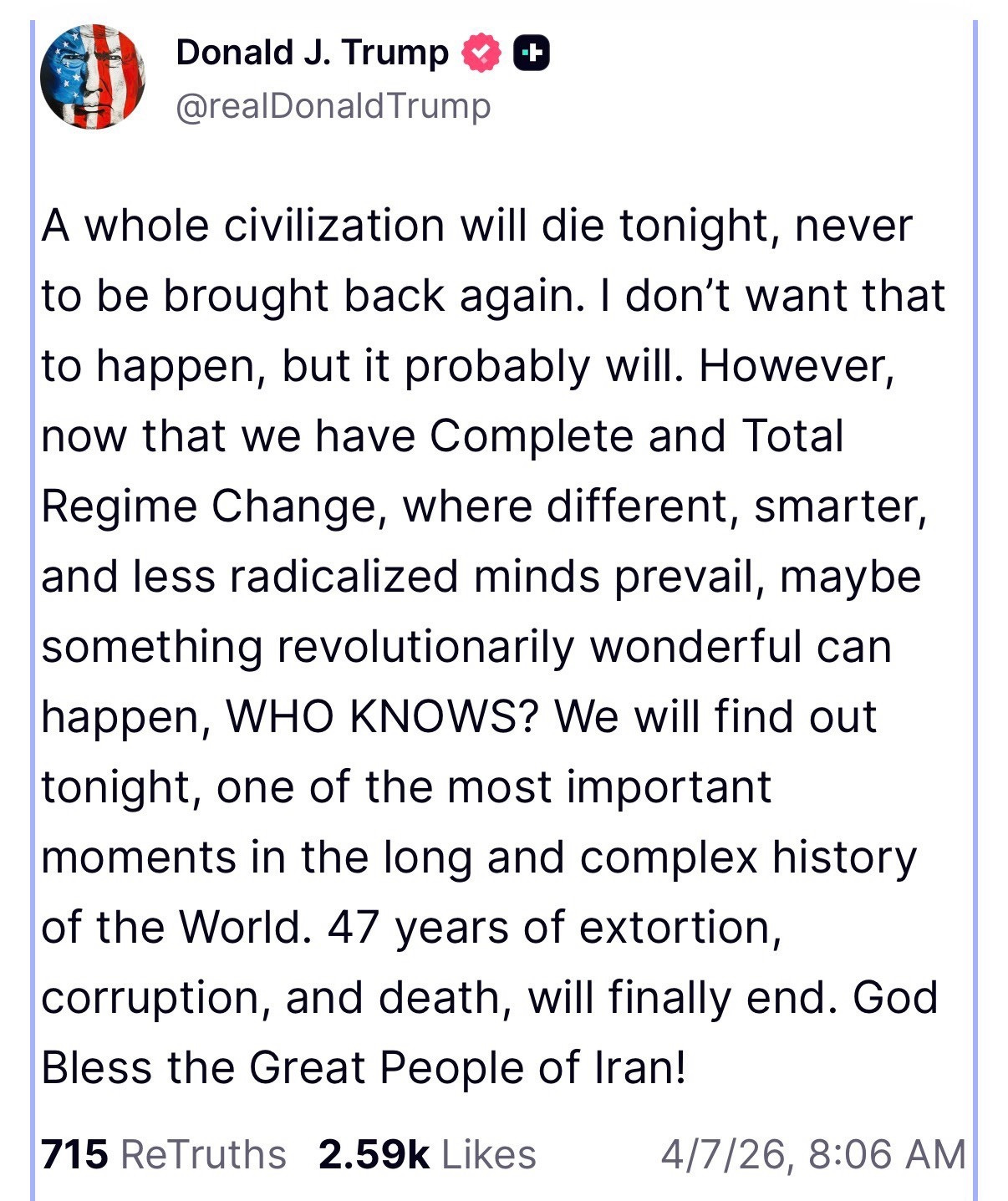
“A whole civilization will die tonight, never to be brought back again.”
Chilling, horrific words. Trump voters and Republican leadership remained silent, or worse, tried to excuse this threat of genocide.
Christ is risen, but bombs and threats still fall.
Thankfully by the end of the day these threats were walked back and a two week ceasefire was announced, but the horror of the threat hangs in the air. Immediately the whitewashing of the narrative kicked in as people said that this was just a negotiation tactic; this is how we “win.” Is this what “winning” looks like? It doesn’t feel like a win to me.
In our house we talk often about the mysterious “now and not yet” nature of the kingdom of heaven. We wrestle with what that means, and why the world is so dark even though Christ is risen, the long-promised light for all nations. We meditate on a kingdom that comes not through a tsunami wave or an avalanche, but as a seed and as yeast.
The waiting is so painful. Little pockets of yeast grow into nourishing bread and some seeds bloom into gardens of love and goodness, but the whole earth is still groaning and suffering much like it was 2,000 years ago.1
How long, O Lord? - We echo the cries and relive the anguish of the prophets, Job, and writer of Ecclesiastes.
Like Job, God’s timing is beyond my ability to understand. I do not have an answer for why there is so much suffering in the waiting. Unlike Job, I have the life and teachings of Jesus to anchor me to hope. The wait for his return feels so long and so hard, but I draw comfort that he knows, and he cares.
I believe in the joyful message of Easter – that Christ has died, Christ is risen, and Christ will come again. I cling to that hope with all of my strength. And yet, it is also healthy and right to name the painfulness of the waiting. Before the joy of resurrection, there was so much pain and suffering. There were so many tears. We do not have a high priest who cannot sympathize with our weaknesses.2
My God, my God, why have you forsaken me?3 - The dying words of a man of sorrows who was acquainted with grief.4 But also the words of a man who knew that the story wasn’t over yet.
Our story isn’t over yet, either. It will not always be this way.
The bombs and threats still fall, AND YET Christ is risen, indeed.
“For we know that the whole creation groans and suffers the pains of childbirth together until now. And not only that, but also we ourselves, having the first fruits of the Spirit, even we ourselves groan within ourselves, waiting eagerly for our adoption as sons and daughters, the redemption of our body. For in hope we have been saved, but hope that is seen is not hope; for who hopes for what he already sees? But if we hope for what we do not see, through perseverance we wait eagerly for it.” Romans 8:22-25